
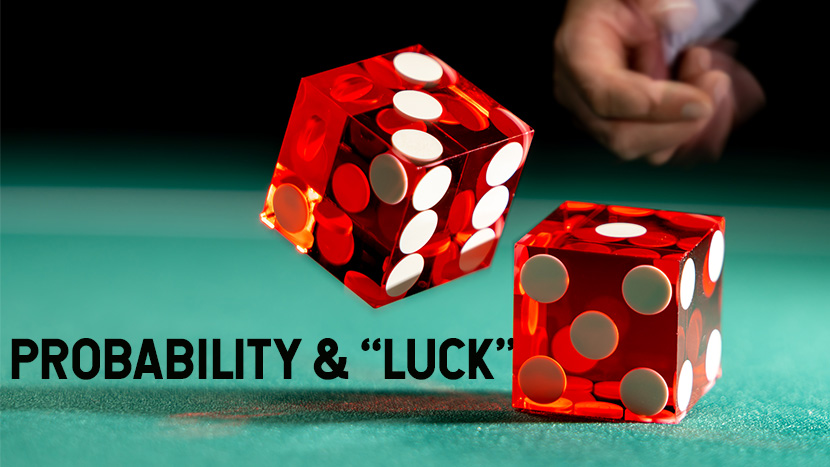
Luck seems mysterious, but the forces behind it follow clear mathematical rules. Probability explains why certain outcomes occur more often than others, even when they look unpredictable. It guides decisions in sports betting, card games, weather forecasts, and everyday choices like crossing the road or choosing a queue at the market.
Understanding probability does not remove uncertainty. It simply gives structure to it. When people make decisions based on “gut feeling,” they often respond to patterns their minds notice but never name. Probability turns those impressions into measurable ideas.
Sports betting makes these patterns easy to see. Every odd reflects a calculation about how likely an event is. Bettors compare risks, weigh rewards, and decide based on how much uncertainty they can accept. Whether they realise it or not, they use probability thinking.
Understanding Probability: The Simple Math Behind Uncertain Events
Probability measures how likely an event is to occur. It takes situations that feel random and gives them structure. A coin toss has two outcomes. Each outcome has a probability of 1/2. A dice roll has six outcomes. Each has a probability of 1/6. These numbers do not guarantee results, but they show what tends to happen over many attempts.
Sports events work the same way, only with more variables. A team’s form, injuries, weather, home advantage, and past performance all affect the likelihood of a win or loss. Bookmakers take these factors and convert them into odds. Bettors then decide if those odds offer fair value.
Even when randomness is high, probability still guides expectations. A weaker team can win, but not often. A star player can miss, but not regularly. Probability expresses these patterns with simple numbers that help people judge risk more clearly.
This same logic appears in everyday life. Choosing a faster route home involves estimating which road has the lowest chance of traffic. Picking a product online involves weighing the probability of it matching expectations. We constantly make small predictions, even when we do not label them as such.
Resources that explain betting concepts — such as read more about probability-based systems — help newcomers see how these ideas translate into real decisions. Understanding the basics sharpens judgment and reduces guesswork.
Probability does not promise certainty. It only shows how the world tends to behave. And that alone is powerful.
Sports Betting as a Probability Playground: Odds, Value, and Expected Outcomes
Sports betting turns probability into a visible, measurable system. Every odd you see—whether on a match winner, total goals, or player performance—expresses a likelihood. Lower odds signal higher probability. Higher odds reflect greater uncertainty. Bettors use these numbers to weigh potential reward against the chance of success.
Value betting illustrates this well. A bet has value when the probability of an outcome is greater than what the odds imply. For example, if a team has a 60% chance to win but the odds suggest only 50%, the bettor has an advantage. This gap between true probability and offered probability is where smart decisions happen.
Expected value (EV) brings even more structure. EV calculates how much a bettor would win or lose if they placed the same bet many times. Positive EV means profit over the long run. Negative EV means the opposite. Bettors who understand EV avoid wagers that look exciting but lose money over time.
Live betting adds another layer. As matches unfold, probability changes with every action—goals, injuries, fouls, substitutions. Odds shift constantly to match new information. This creates a dynamic environment where quick probability thinking matters.
The strength of sports betting lies in how clearly it displays uncertainty. It shows probability not as theory but as a practical tool used to make choices with real consequences.
Say “continue” for the next section.
Everyday Decisions and Invisible Probabilities: How We Use Chance Without Noticing
People rely on probability constantly, even when they never mention numbers. The brain weighs risks and rewards in small moments. It predicts outcomes based on past patterns. It estimates which choices carry the least uncertainty. These invisible calculations guide daily behavior.
Take crossing a busy road. You judge the speed of cars, the distance between them, and the likelihood that you can cross safely. None of this feels like math, but it is probability in action.
When you choose a grocery checkout line, you estimate which line will move faster. You consider the number of items in each cart and the cashier’s pace. You form a quick probability judgment to reduce waiting time.
Even simple tasks reflect this pattern. Picking an umbrella depends on your estimate of rain. Taking a shortcut home depends on your sense of traffic. Calling a friend at a certain hour depends on your guess of whether they are free. These decisions follow the same logic bettors use — compare chances and act accordingly.
People also rely on probability when dealing with uncertainty at work. A manager decides which project has the best chance of success. A student chooses which topic is most likely to appear on an exam. A doctor estimates which treatment has the highest likelihood of helping a patient. None of these outcomes are guaranteed, yet each decision uses the structure of probability.
Probability is not a special skill for mathematicians or bettors. It is a natural part of human thinking. Understanding it simply makes our choices clearer.
Why Understanding Luck Matters: Better Choices, Clearer Risks, and Smarter Patterns
Knowing how probability works changes the way people interpret luck. Instead of seeing outcomes as pure chance, they start to see patterns, tendencies, and avoidable risks. This shift creates better decision-makers in betting and in everyday life.
Understanding probability helps separate rare events from likely ones. It prevents people from overreacting to unusual outcomes or assuming a single result defines a trend. Bettors stop chasing long shots without value. Shoppers stop buying products based only on one bad review. Students stop panicking over unlikely exam topics.
Probability also sharpens risk awareness. When people understand how likely a loss is, they make steadier choices. They avoid overconfidence. They recognize when the potential reward does not match the risk. This mindset applies equally to choosing bets, planning expenses, or deciding when to take on a new challenge.
Seeing luck through a mathematical lens also reveals the importance of sample size. One win means little. Many wins reveal a pattern. One failure teaches something. Many failures teach more. Probability encourages long-term thinking instead of reacting to isolated outcomes.
Most importantly, probability gives people a calm framework for uncertainty. Life always contains unknowns, but clear thinking reduces fear. It helps people stay grounded when results go against expectation. They understand the process, not just the result.
Luck may feel random, but probability shows that uncertainty still follows rules. Learning those rules makes every choice more deliberate.
Probability Turns Uncertainty Into Understanding
Probability does not remove uncertainty, but it gives shape to it. It explains why some outcomes repeat and why others remain rare. It helps people make decisions based on patterns rather than impulses. Whether someone places a sports bet, chooses a route home, or manages a daily task, they rely on the same fundamental logic: weigh the odds, judge the risk, and act with intention.
Sports betting makes this process visible. Odds become a mirror of probability. Bettors compare chances, evaluate value, and learn to ignore noise. This same thinking applies everywhere else — in shopping choices, workplace decisions, personal planning, and even simple daily routines. Probability quietly supports each decision, turning uncertainty into something manageable.
Understanding the mathematics of luck does not guarantee success. It simply gives people a clearer way to navigate randomness. With that clarity, they make more confident choices, avoid common mistakes, and respond to unexpected outcomes with a calmer mind.