
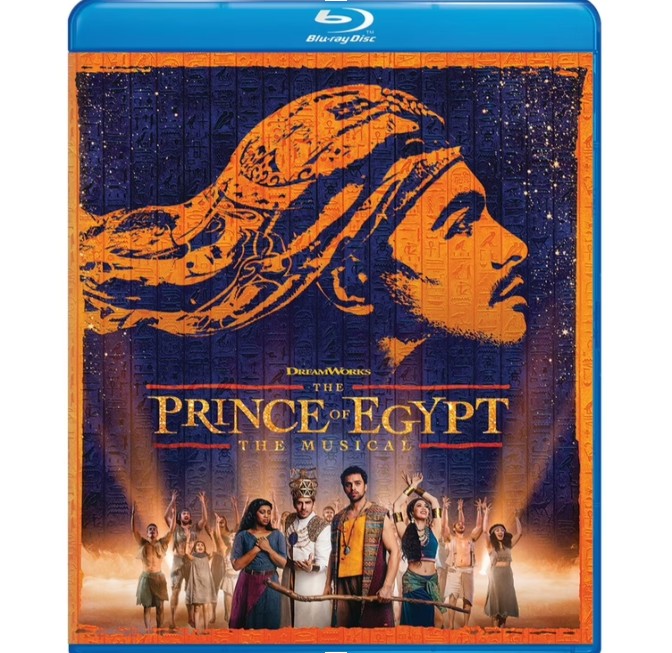
The transition of a beloved animated masterpiece to the live stage, and subsequently capturing that theatrical event on film, represents one of the most complex creative undertakings in modern entertainment. When DreamWorks Animation released The Prince of Egypt in 1998, it redefined the boundaries of traditional us.theprinceofegyptmusicalfilm.com feature animation, merging breathtaking visual scale with a profound, emotionally mature narrative and an unforgettable score by Stephen Schwartz. Decades later, this cinematic jewel underwent a massive metamorphosis into a West End musical, which was ultimately preserved forever through a high-definition live capture film.
The journey from hand-drawn cells to real-time theatrical stagecraft, and finally back to a digital screen, is an epic saga of artistic adaptation, technical innovation, and storytelling resilience.
The Animated Genesis: Setting a Monumental Standard
To understand the magnitude of the musical film adaptation, one must first look back at the groundbreaking nature of the 1998 animated feature. Spearheaded by DreamWorks co-founder Jeffrey Katzenberg, The Prince of Egypt was designed to prove that animation could handle serious, epic, and adult themes. It was a visual marvel, utilizing a hybrid of traditional hand-drawn animation and nascent computer-generated imagery to depict biblical spectacles like the Burning Bush, the Ten Plagues, and the iconic Parting of the Red Sea.
Accompanying these visuals was an extraordinary auditory landscape. Stephen Schwartz, alongside composer Hans Zimmer, crafted a soundtrack that felt both historically grounded and universally resonant. Songs like “Deliver Us” established a brutal, operatic tone, while “When You Believe” went on to win an Academy Award and become a global pop phenomenon. The animated film was self-contained, tightly paced, and fundamentally tied to the limitless physics of the animator’s pencil. Every camera angle could be perfect, every crowd scene could feature thousands of unique faces, and the elements of nature could bend perfectly to the directors’ wills.
Reimagining the Epic for the West End Stage
Translating a film defined situs bola by its infinite canvas into the physical, three-dimensional confines of a theater stage required a complete reimagining of the narrative’s visual grammar. When the stage musical adaptation was greenlit for London’s West End at the Dominion Theatre, the creative team faced a daunting question: How do you replicate a cinematic miracle on a wooden stage night after night?
The answer lay not in hyper-realism or massive mechanical props, but in the power of human movement and theatrical illusion. Director Scott Schwartz and choreographer Sean Cheesman chose to lean heavily into physical theater. Instead of building a massive, literal Red Sea out of plastic or fabric, the production utilized an ensemble of highly skilled dancers. The human body became the primary medium of storytelling. Dancers contorted themselves to form the burning bush, shifted dynamically to recreate the churning waters of the Nile, and used expressive choreography to embody the invisible, terrifying force of the final plague.
Furthermore, a stage musical requires significantly more narrative real estate than a ninety-minute animated film. The book, written by Philip LaZebnik (who also co-wrote the original film), expanded the internal lives of the characters. The relationship between Moses and Ramses was given more depth, transforming them from archetypal rivals into deeply conflicted brothers torn apart by duty, faith, and systemic oppression.
Stephen Schwartz returned to pen ten brand-new songs, expanding the musical palette to explore the perspectives of Queen Tuya, Tzipporah, and the collective trauma of both the Egyptian and Hebrew peoples. The intimate nature of the theater allowed the epic story to become, simultaneously, a deeply personal family drama.
The Pivot to Live Capture: The Best Seat in the House
The West End production was a visual and emotional triumph, but theatrical runs are inherently limited by geography and time. To democratize the experience and preserve the performances of its stellar cast—led by Luke Brady as Moses and Liam Tamne as Ramses—the decision was made to produce a live capture film.
Live capture, or filmed theater, is a distinct art form that sits at the intersection of cinema and live performance. It is not merely a passive recording from the back of the auditorium; it is an active translation of theatrical energy into cinematic language. For The Prince of Egypt Musical, the filming process required meticulous planning to ensure that the scale of the Dominion Theatre production translated seamlessly to home screens and movie theaters worldwide.
Filming a live theater production presents unique technical challenges that differ wildly from a traditional Hollywood film shoot:
- Lighting Adjustments: Theatrical lighting is designed for the human eye, which adapts differently than a camera sensor. For the live capture, lighting designers had to work closely with the film director to tweak intensity and color balances so that the stage did not appear washed out or overly dark on screen.
- Camera Choreography: Multiple high-definition cameras, including cranes, steadicams, and fixed positions, were deployed throughout the theater. Camera operators had to memorize the choreography of the actors to avoid being seen in shots while capturing dynamic close-ups that revealed the raw emotion on the actors’ faces—details that are often lost to audience members sitting in the balcony.
- Audio Engineering: Capturing the sound of a live musical involves balancing body microphones on the actors, ambient microphones over the stage, and the direct feed from the live orchestra. The final mix had to deliver the booming, cinematic punch of the original orchestrations while maintaining the clarity of the live vocal performances.
From Screen to Stage and Back Again: The Narrative Full Circle
The release of The Prince of Egypt Musical Film represents a fascinating artistic full circle. A story that began as a film was dismantled and rebuilt to fit the structural rules of live theater, only to be re-packaged through a cinematic lens once more.
What viewers experience in the live capture film is a hybrid piece of art. It retains the theatricality of the West End production—the sweat on the performers’ brows, the palpable tension of a live audience, the fluid transitions of the physical ensemble—but enhances it with the intimacy of film editing. When Moses sings “Footprints on the Sand,” the close-up shot allows the digital audience to see the vulnerability in his eyes, creating an empathetic connection that mirrors the intimacy of the 1998 animated close-ups, yet carries the undeniable weight of a real human being experiencing that emotion in real-time.
The live capture also highlights the timelessness of the underlying themes. The story of liberation, systemic injustice, brotherly love, and identity remains as potent today as it was thousands of years ago, or when the animated film debuted in the late twentieth century. By preserving the stage production on film, the creators ensured that this specific, highly imaginative interpretation of the Exodus story would remain accessible to global audiences, independent of the physical limitations of London’s theater district.
Conclusion: A Legacy Preserved in Pixels and Passion
The epic journey of The Prince of Egypt from a groundbreaking animated feature to a sweeping West End musical, and finally to a beautifully executed live capture film, underscores the versatility of exceptional storytelling. It proves that when a narrative is built on a foundation of profound themes, rich character development, and transcendent music, it can thrive in any medium.
The musical film adaptation does not replace the 1998 animated masterpiece; rather, it stands alongside it as a worthy sibling. It honors the scope of the original animation while celebrating the unique, collaborative magic of live theater. Through the medium of live capture, the thunderous applause of the Dominion Theatre continues to echo, allowing audiences around the world to witness the parting of the seas and the triumph of faith from the best seat in the house, indefinitely.